
Great produce doesn’t have to look perfect.
We supply restaurants, cloud kitchens and food processors across Bangalore with freeform fruit and vegetables — cosmetically imperfect, entirely fit to eat, and 25–30% cheaper on procurement.
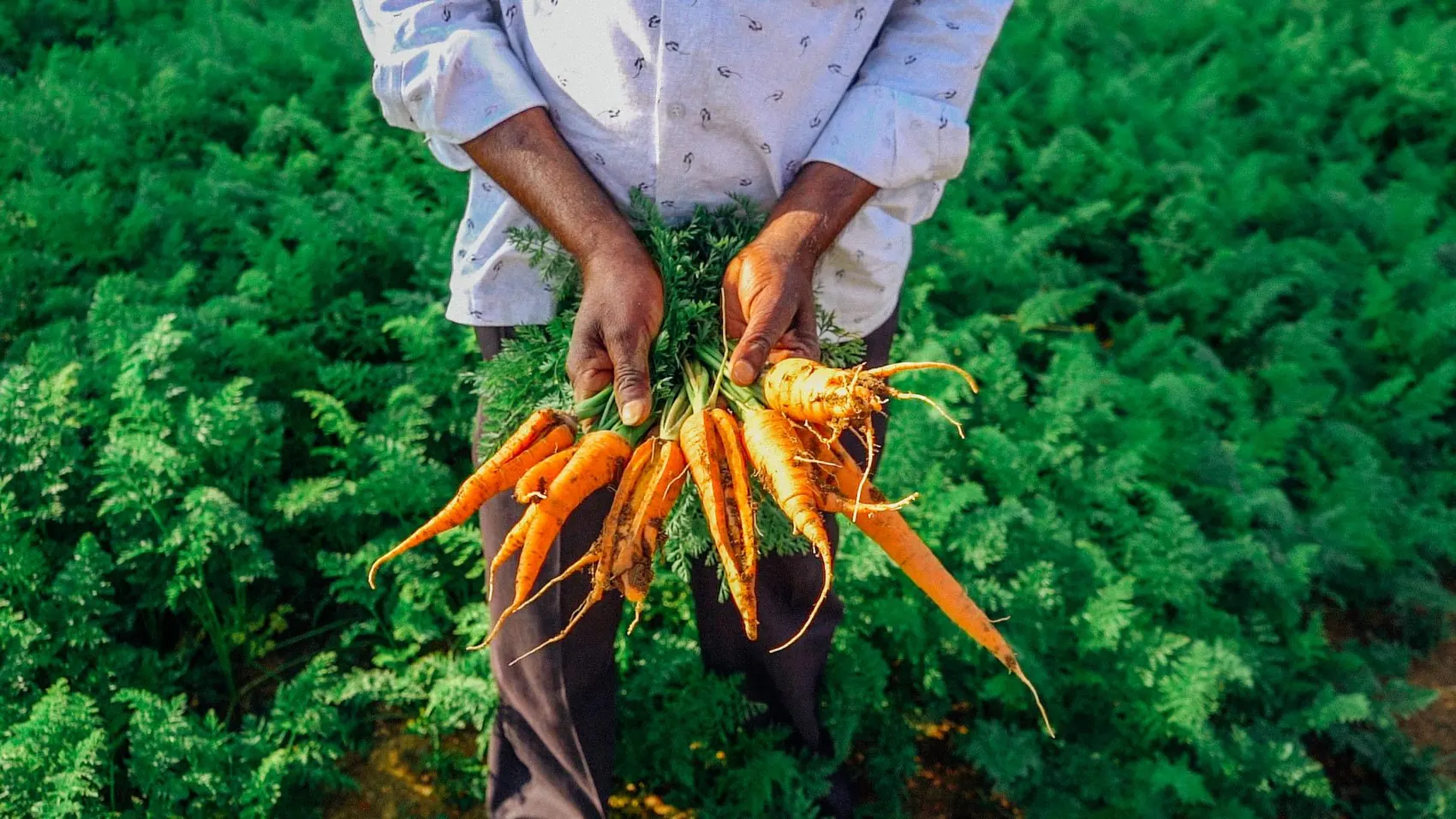
3,000+ farmers supplying
800–1,000 kitchens served
~20 tonnes delivered daily
<20 hrs order to doorstep
The produce
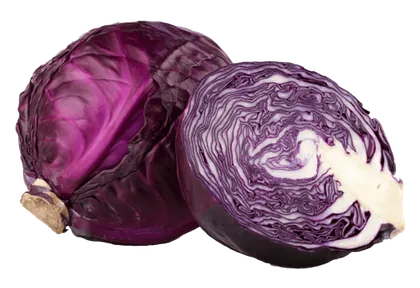
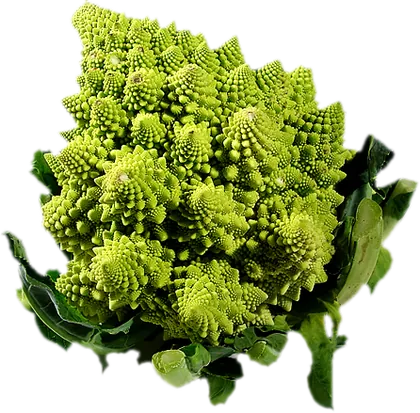
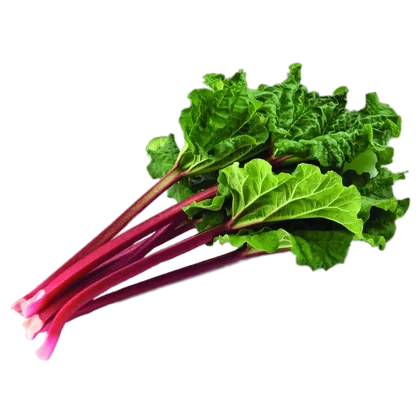
This is what freeform looks like.
Around 30% of a farmer’s harvest goes unsold on appearance alone — too small, misshapen, rain-marked, scarred. The food is unaffected. Only the grading standard says otherwise, and once it is chopped, puréed or fried, nobody can tell the difference.
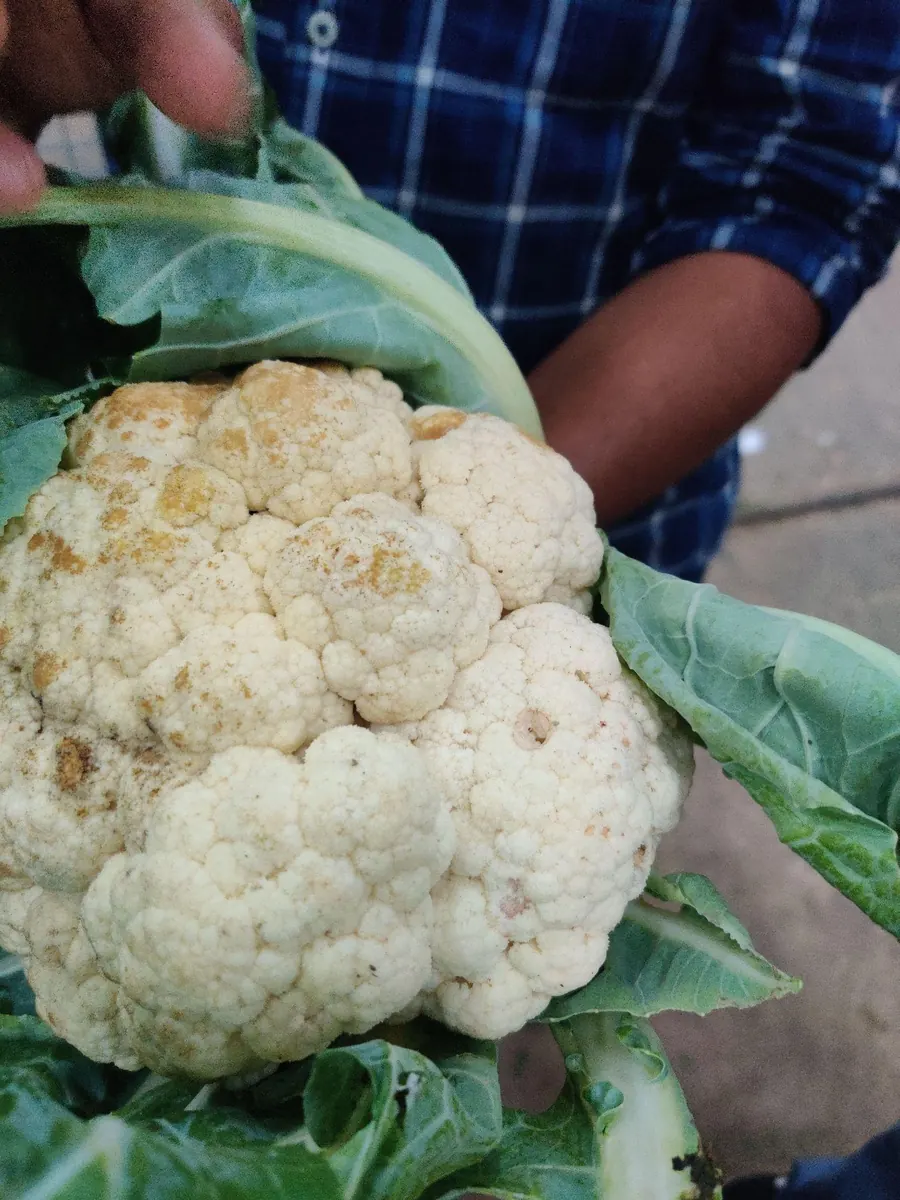
Scars & rain-marks
Surface marking from weather and handling. No effect on taste, texture or yield.
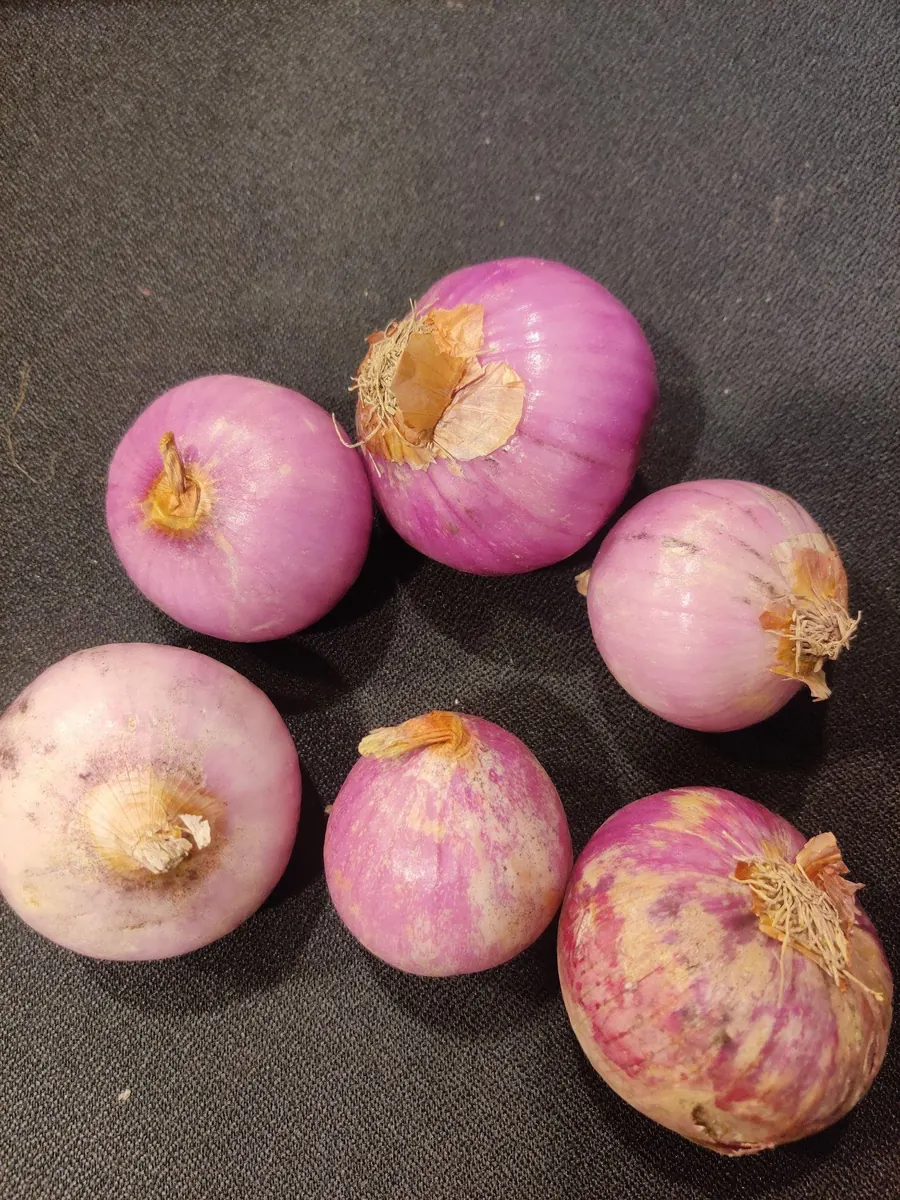
Skin-out
Outer skin split or shed in storage. The onion underneath is untouched.
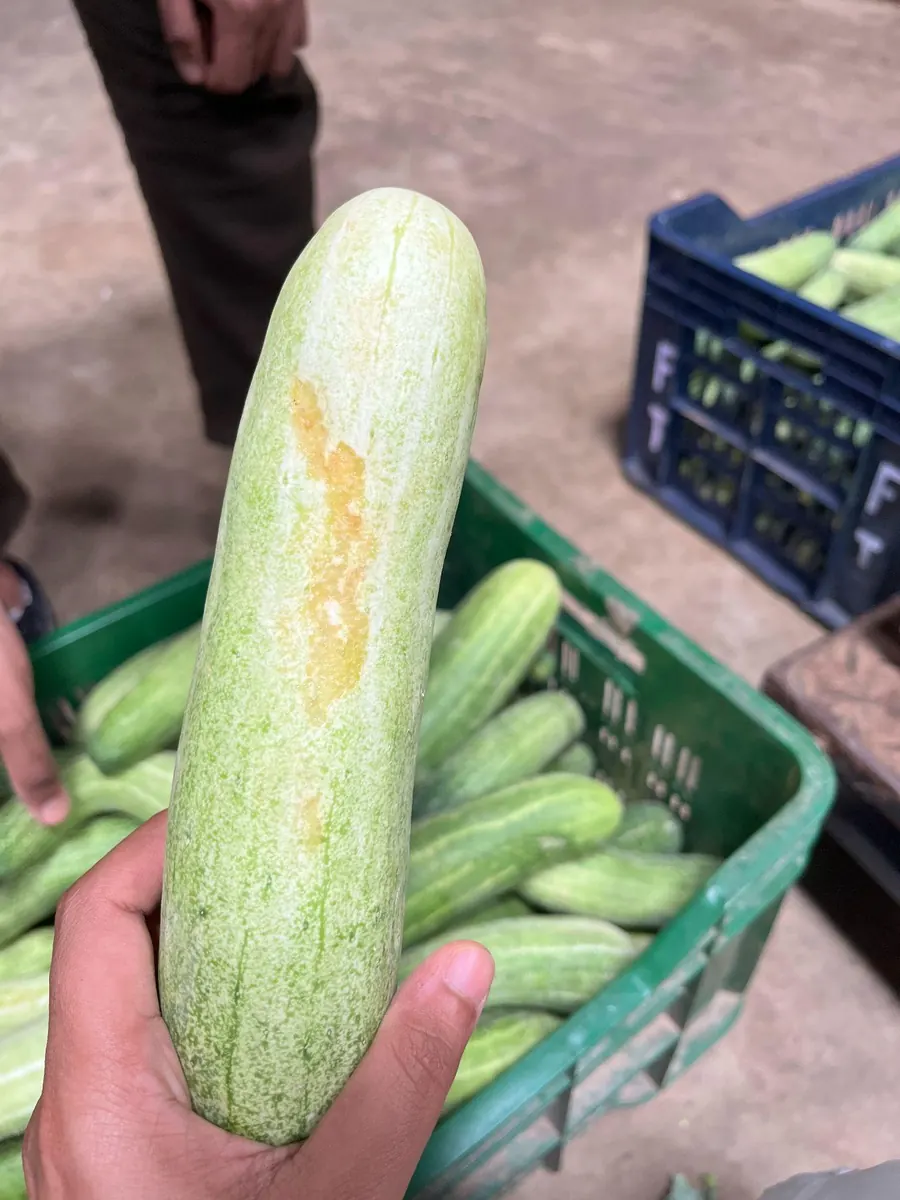
Bulged & pinched
Grown against a stone or a stem. Rejected on shape, identical once sliced.
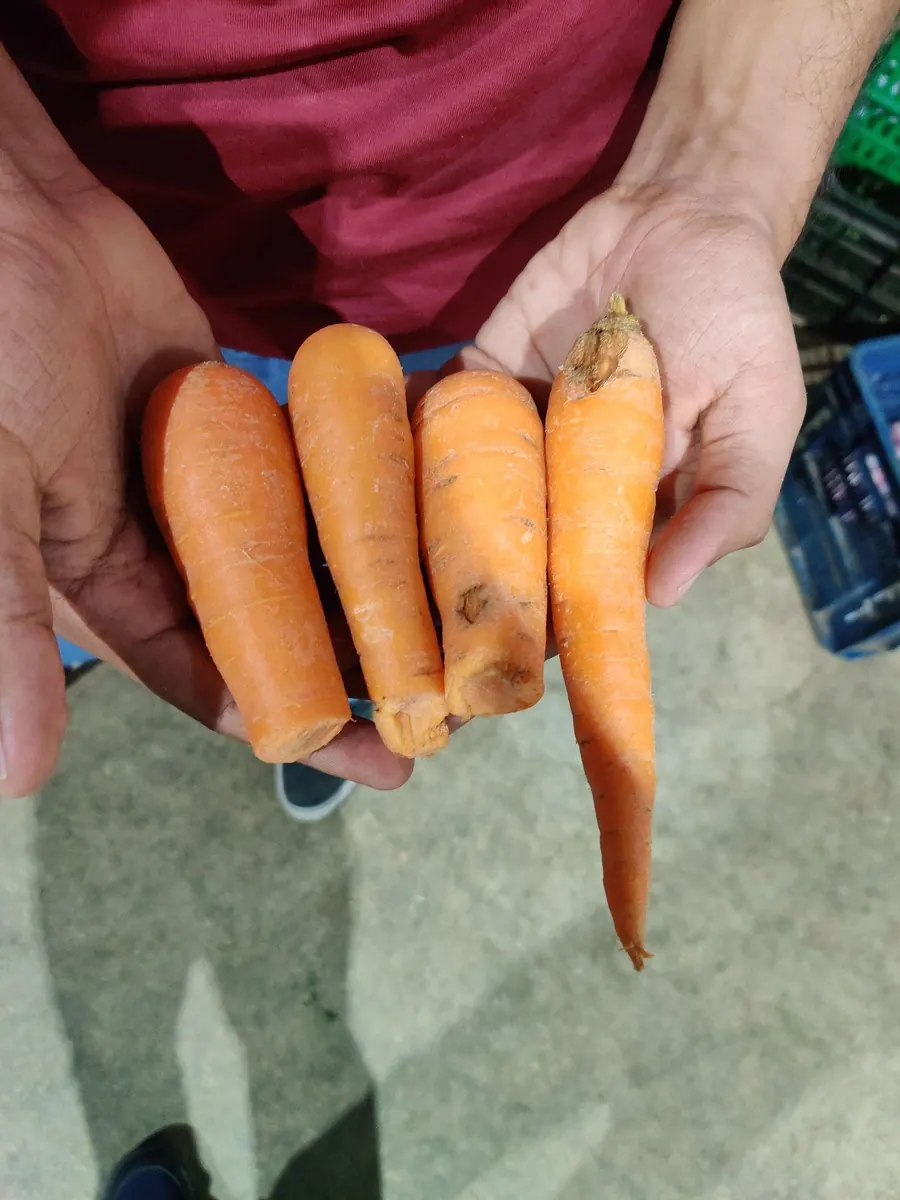
Broken ends & too small
Off-spec on length or grade. Exactly the same carrot in a stock or a mirepoix.
For kitchens
Lower food cost, without lowering the food.
We buy freeform produce direct from farms and take it straight to your kitchen. Fewer hands in the chain means a lower price to you and a better one to the farmer.
25–30%
Saved on procurement
Typical savings for our food business partners against their previous sourcing cost.
<20 hrs
Order to doorstep
Ordered today, delivered tomorrow — picked, packed and routed on our own fleet.
All grades
Perfect to freeform
Take freeform where it makes no difference, premium where it shows on the plate.
Chains
Every outlet, one account
Every outlet on one account, with pricing, invoices and approvals split by role.


How it works
Four steps, one supply chain.
Conventional produce passes through agents, the mandi and a wholesaler before it reaches a kitchen. Every stop adds a markup and a day of shelf life. We removed them.
Bought at the farm
Collection centres at farm level buy the whole harvest — including the freeform grades no one else will take.
Sorted and packed
Graded, weighed and packed at our distribution centre, with the final weight recorded at the moment of packing.
Priced to your kitchen
Pack sizes and pricing matched to what your kitchen actually consumes, rather than one catalogue for everyone.
Delivered to the door
On our own fleet, in under 20 hours from order, anywhere we operate in Bangalore.
Ordering
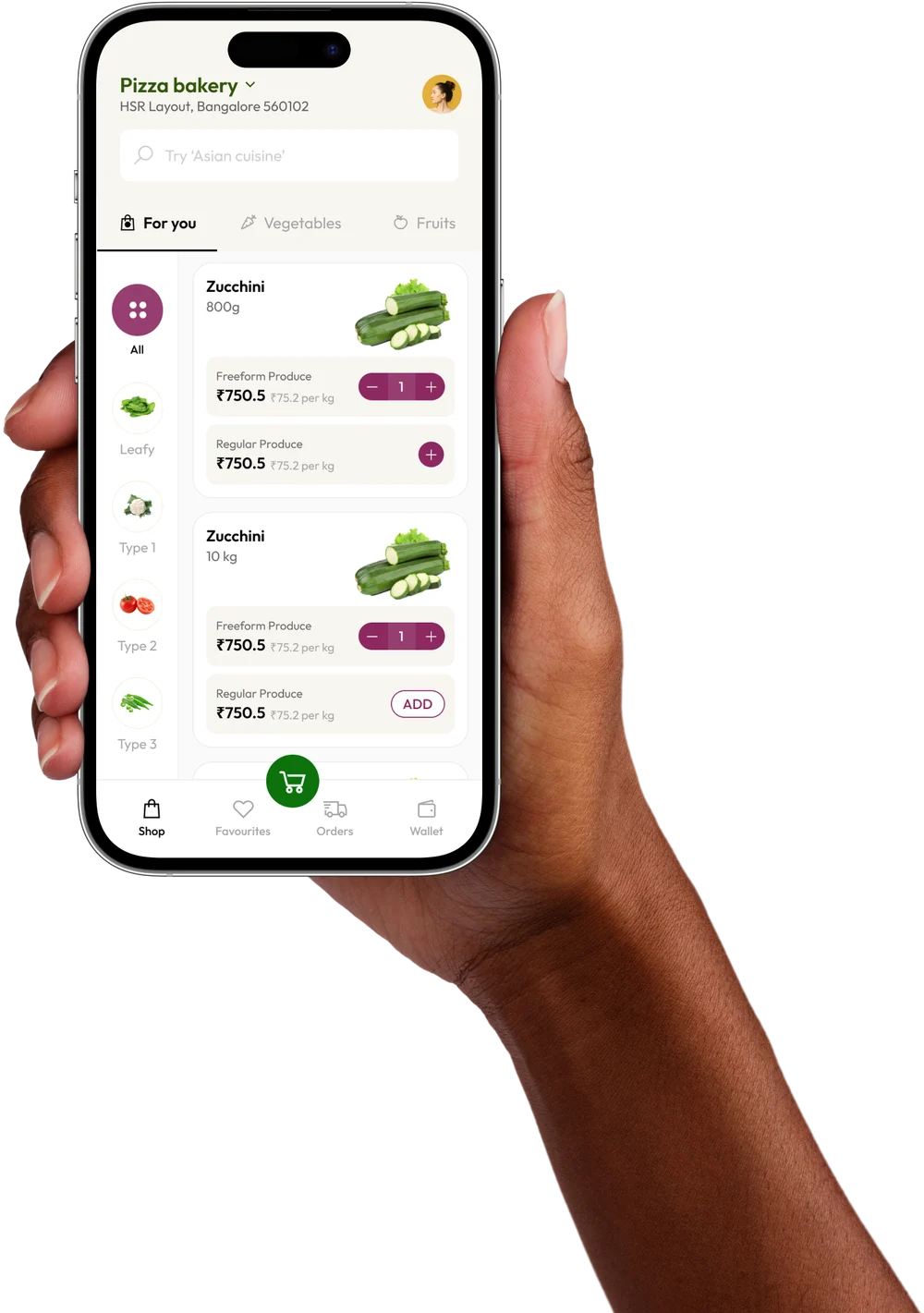
The whole account, in one app.
Order the day’s list, see what is cheap today, settle invoices and manage every outlet from one place — or just send us a WhatsApp, and we will put it in for you.
- Role-based accessProcurement sees orders and pricing, finance sees invoices across outlets, chefs see what is cheap today.
- Order on WhatsAppKeep ordering the way your team already does. We enter it into the system on your behalf.
- Wallet and creditBalances, dues and payment status in one view, across every outlet on the account.
- Freeform recipesIdeas from our kitchen team for putting off-spec produce to work without waste.
Impact
Every crate is food that was going to be thrown away.
Buying the whole harvest changes the economics on both ends — the farmer sells what would have been left in the field, and the kitchen pays less for it.
200,000 kg
Saved every month
Food that would otherwise have been written off, redirected to kitchens instead.
~20% more
Earned by farmers
On produce they had no route to sell, from a buyer who takes the whole field.
1.07M litres
Of water, per partner
Saved each year by a typical food business partner, alongside 1,152 kg of CO₂.
3,600 kg
Of produce, per partner
Rescued every year — enough to feed 10,000 school children through a mid-day meal.
Find out what your kitchen would save.
Send us your current produce list and we will come back with a comparison, usually within a day.
Get in touch